Le travail présenté sur ce site est constitué par mes notes de recherche. Il a principalement été réalisé entre 2007 et 2019 alors que je poursuivais des études de baccalauréat, de maîtrise et de doctorat en histoire de l'art. Mes questions de recherche portaient sur les expositions organisées à Montréal entre 1860 et 1920, principalement les expositions d'œuvres prêtées à l'Art Association of Montreal devenue depuis le Musée des beaux-arts de Montréal. Le contenu est donc fortement orienté dans cette direction. Malgré tout, j'espère qu'il saura vous renseigner sur des aspects de cette période de notre passé artistique. Vous pouvez accéder à l'accueil des notes de recherche ou retourner sur l'accueil du site marcgauthier.com.
Commentaires
* 2019 Royal Collection Trust:
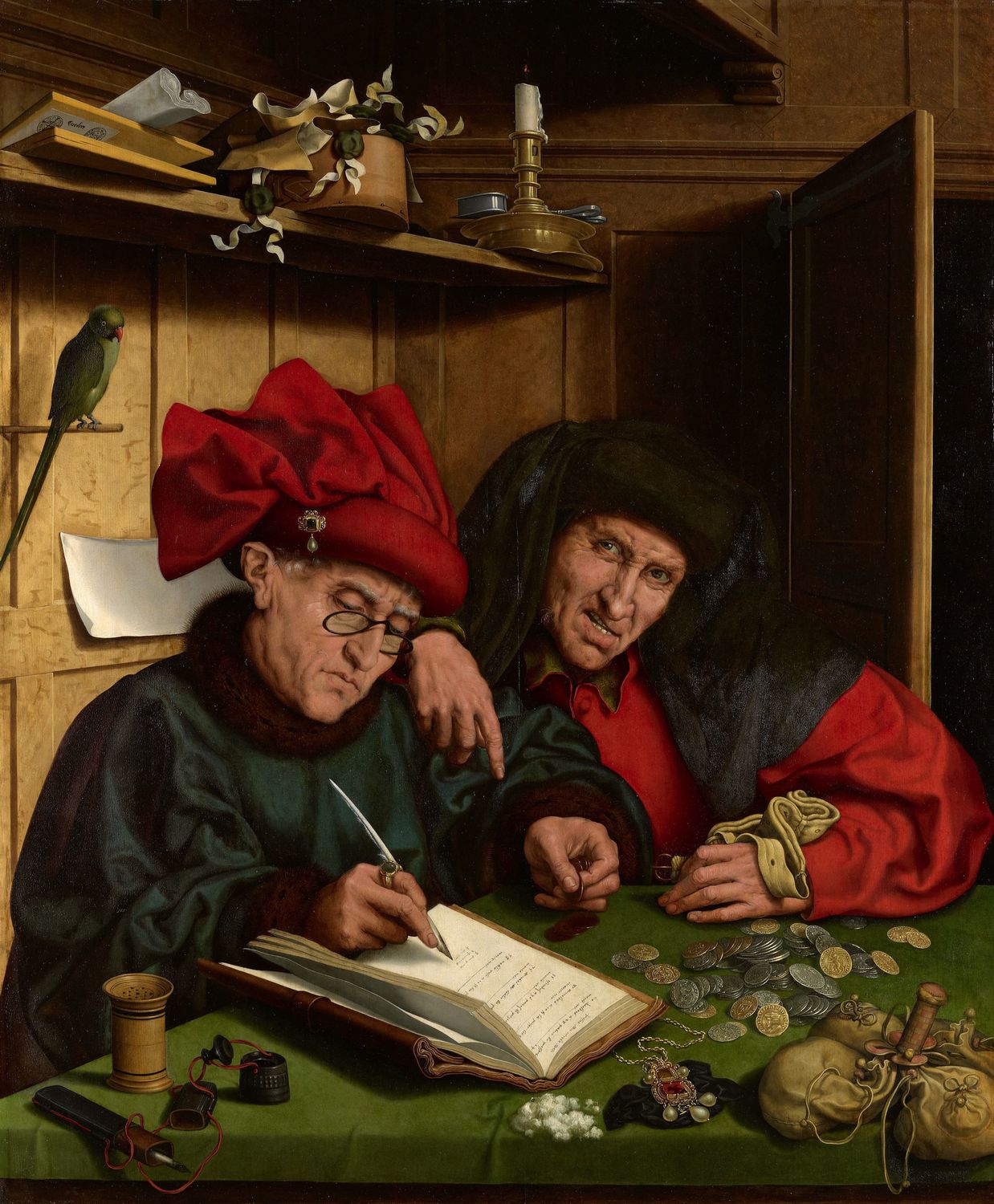
In c.1520 the Venetian nobleman Marcantonio Michiel saw a painting of a banker and his client in Milan by Jan van Eyck which he noted had been painted in 1440. The lost original appears to have been the catalyst for a popular type of painting in the sixteenth century showing a similar subject matter, where the figures wear fifteenth-century dress (which would have looked archaic) and have grotesque features. There are around sixty surviving sixteenth-century variants which can be divided into two categories based on original works by two artists: Quinten Massys (1465/6-1530) and Marinus van Reymerswaele (c.1490/95-c.1567). The Massys original no longer survives, but was probably initially conceived as a distorted follow-up to his earliest secular painting The Moneychanger and his Wife, 1514. The Marinus van Reymerswaele variants derive from the signed Two Tax Gatherers painted in the 1540s (Ministère des Finances, Paris). An example of this is the replica in the National Gallery, London, created in Reymerswaele's workshop, using a tracing of the original. The present work is based on Reymerswaele's original Two Tax Gatherers, and although a tracing may have been used for the main elements of the composition, the hand of a distinct artist can be discerned in the refined painting technique and the inclusion of individual elements not present in the Paris picture, such as a parrot on a perch and an elaborate moneybag on the table. The present work is very close to another version (National Pushkin Museum, Moscow) and it seems most likely that the artist was a talented follower of Marinus van Reymerswaele. Cleaning and conservation have revealed the high quality of the painting and the precision of details, such as the change in skin tone when seen through the spectacles worn by the man on the left and the blemishes in the skin of the man on the right. The freer underdrawing and livelier handling of paint in this man's face and hands contrasts with the tighter depiction of the still life on the shelf above.
RCIN 405707
https://www.rct.uk/collection/search#/3/collection/405707/the-misers
Page consultée le 2 juillet 2019
* 1865 AAM:
After Quintin Matsys
À vendre
Collectionneur(s) / propriétaire(s) recensés de l'œuvre
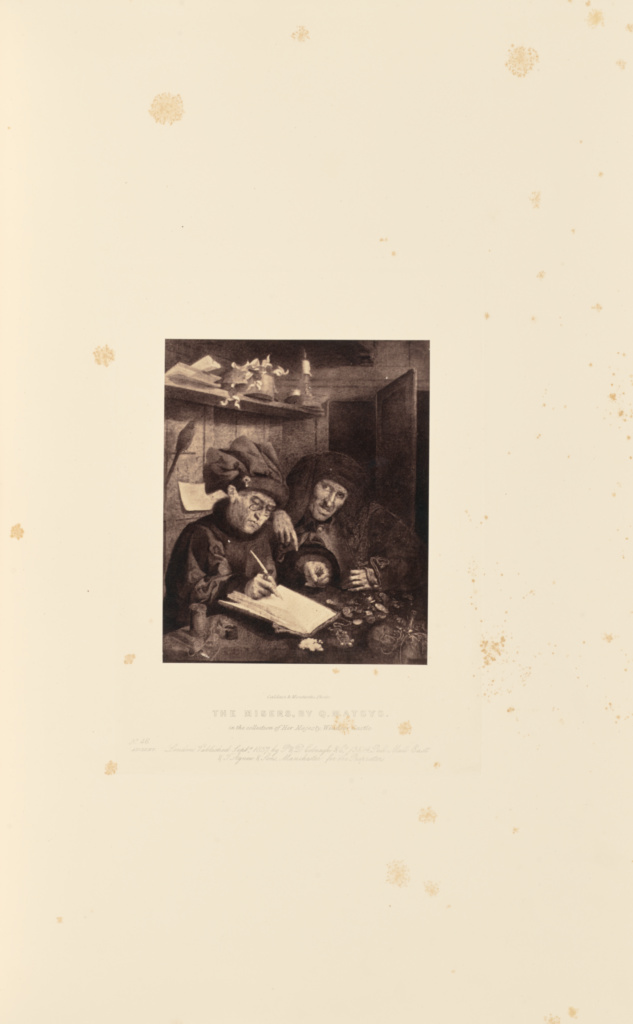
The Misers, by Q. Matsys
Caldesi & Montecchi (British, active 1850s)
London, England (Place Created)
1858
Albumen silver print
84.XB.582.1.46
16.4 × 13.4 cm (6 7/16 × 5 1/4 in.)
Getty Museum
http://www.getty.edu/art/collection/objects/139789/caldesi-montecchi-the-misers-by-q-matsys-british-1858/?dz=0.5056,0.5056,0.95
Page consultée le 2 juillet 2019
The Misers 1548-51
Follower of Marinus van Reymerswaele (c1490-c1567)
Oil on panel
118.0 x 98.0 cm
RCIN 405707
Royal Collection Trust
https://www.rct.uk/collection/search#/3/collection/405707/the-misers
Page consultée le 2 juillet 2019
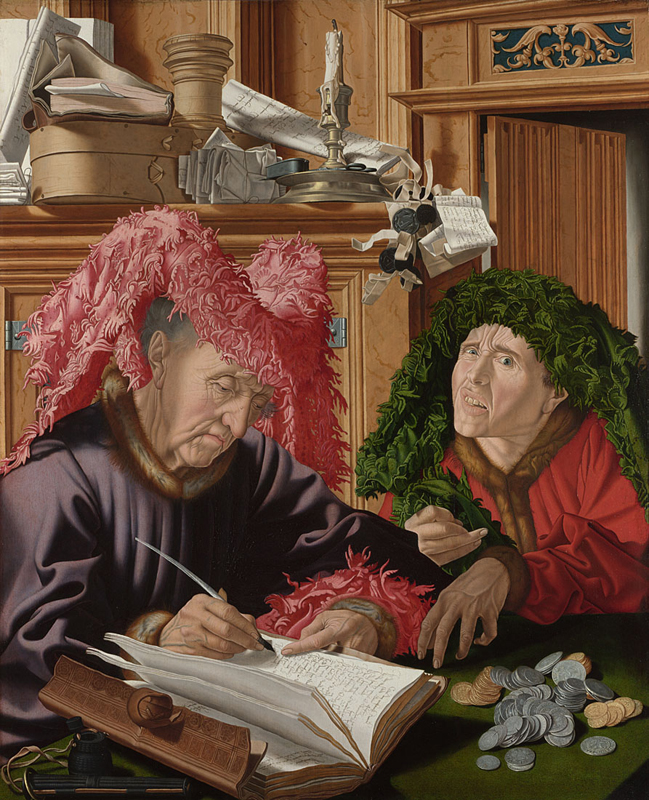
Two Tax-Gatherers
probably 1540s
Workshop of Marinus van Reymerswale
active 1533-1545
Oil on oak
92 x 74.6 cm
Wynn Ellis Bequest, 1876
NG944
Room 5
National Gallery, LOndres
https://www.nationalgallery.org.uk/paintings/workshop-of-marinus-van-reymerswale-two-tax-gatherers
Page consultée le 2 juillet 2019