Le travail présenté sur ce site est constitué par mes notes de recherche. Il a principalement été réalisé entre 2007 et 2019 alors que je poursuivais des études de baccalauréat, de maîtrise et de doctorat en histoire de l'art. Mes questions de recherche portaient sur les expositions organisées à Montréal entre 1860 et 1920, principalement les expositions d'œuvres prêtées à l'Art Association of Montreal devenue depuis le Musée des beaux-arts de Montréal. Le contenu est donc fortement orienté dans cette direction. Malgré tout, j'espère qu'il saura vous renseigner sur des aspects de cette période de notre passé artistique. Vous pouvez accéder à l'accueil des notes de recherche ou retourner sur l'accueil du site marcgauthier.com.
Commentaires
* Sotheby's 2016:
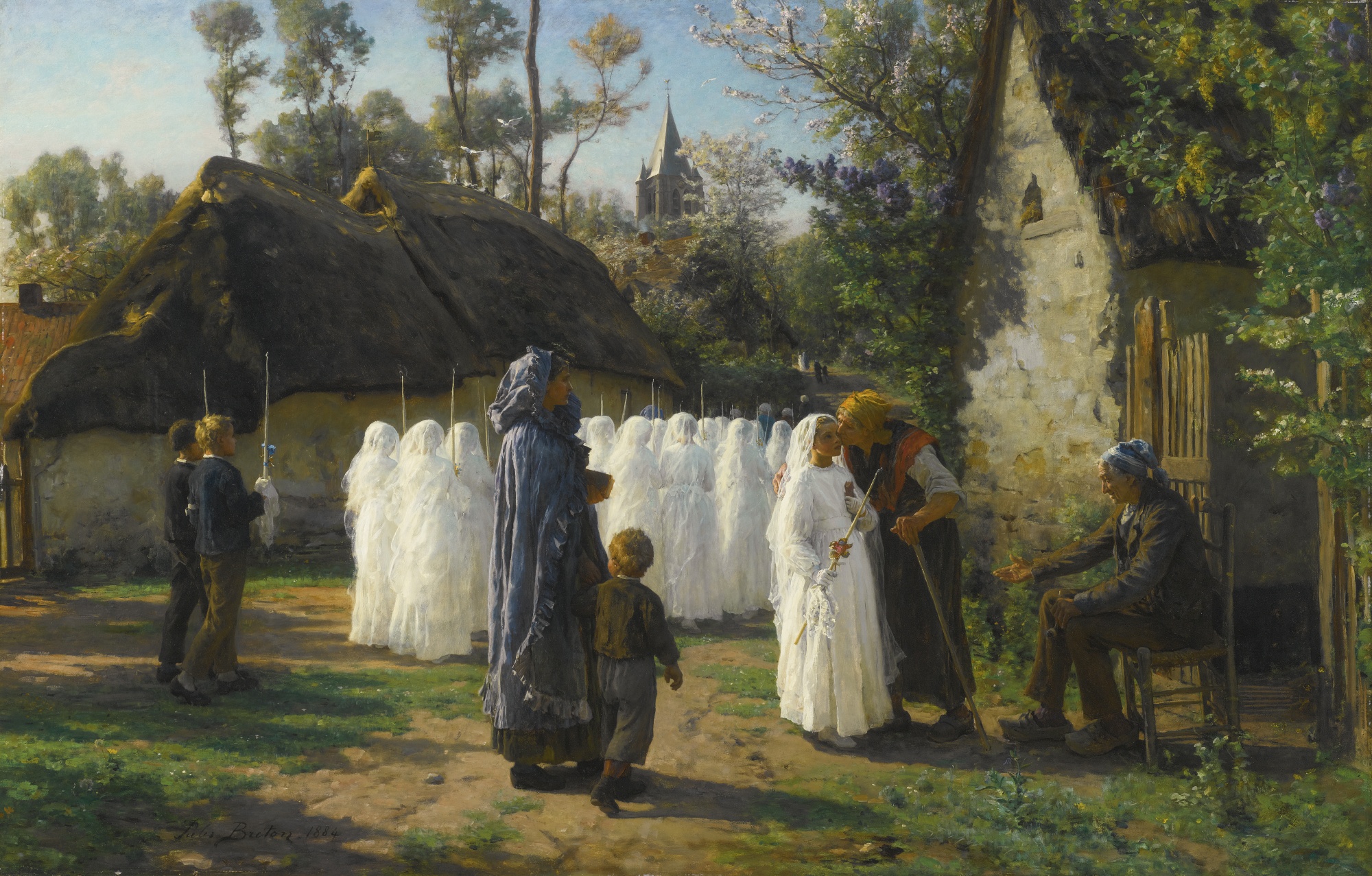
signed Jules Breton and dated 1884 (lower left)
oil on canvas
48 5/8 by 75 3/8 in.
123.5 by 191.5 cm
- Vente:
19th Century European Art
18 may 2016
- Authentification:
We would like to thank Annette Bourrut Lacouture for confirming the authenticity of this lot and providing additional catalogue information. This work will be included in her forthcoming catalogue raisonné of the artist's work.
- Provenance:
Samuel P. Avery (acquired directly from the artist in 1884)
Mary J. Morgan (acquired from the above in 1884 and sold; her sale, American Art Association, New York, 1886, lot 235)
Donald A. Smith, later Lord Strathcona, Montreal and London (acquired at the above sale)
Thence by descent through the family (until 1988)
Sale: Christie's, London, June 24, 1988, lot 86, illustrated
Joey and Toby Tanenbaum, Toronto (acquired at the above sale)
Sale: Sotheby's, New York, May 23, 1996, lot 45, illustrated
Acquired at the above sale
- Exhibited:
Paris, Salon, 1884, no. 355
Montreal, 1887
London, Guildhall, 1898, no. 20
Perth, Perth Museum and Art Gallery, 1947-1988, on extended loan
Newcastle upon Tyne, Polytechnic Art Gallery; Sheffield, Mappin Art Gallery; Paisley, Paisley Art Gallery; Aberdeen, Aberdeen Art Gallery, Peasantries: 19th Century French and British Pictures of Peasants and Field Workers, October 10, 1981 - March 27, 1982
Omaha, Joslyn Art Museum, Jules Breton and the French Rural Tradition, 1982-1983, no. 45
Montreal, Musée des Beaux-Arts de Montreal, Le goût de l'art: les collectionneurs montréalais: 1880-1920, December 1989-February 1990, no. 5
- Literature:
Bilingske Tildende, Copenhagen, April 30, 1884
Daily Telegraph, London, May 1, 1884
Darcel, Le Journel de Rouen, May 3, 1884
Dictionnaire Véron, May 7, 1884
Hustin, Le Moniteur des Arts, May 8, 1884
La Presse Illustrée, May 11, 1884
El Impartial Boulevardier, Madrid, May 12, 1884
Montlandry, La Dépêche, Lille, May 15, 1884
Durcos, Le Sémaphore, Marseille, May 16, 1884
Queen, London, May 17, 1884
Darcours, Journal Illustré, May 18, 1884
Le Francais, May 19, 1884
The Scotsman, May 21, 1884
The Academy, May 24, 1884, p. 410
L'Univers Illustré, May 26, 1884
"The Salon, Paris," The Athenaeum, May 31, 1884, p. 702
Henri Houssaye, Le Salon de 1884, Revue des deux Mondes, May-June 1884, p. 581-2
Kölnische Zeitung, Cologne, June 3, 1884
The Times, London, June 3, 1884, p. 8
L'Art Moderne, Brussels, June 8, 1884
Besnos, Salon des Artistes de 1884, July 11, 1884
"The Paris Salon," The Art Journal, 1884, p. 223
Paul Mantz, "Le Salon: IV," Le Temps, May 1884
The London Times, June 3, 1884, p. 8
Emmanuel Ducros, "Jules Breton," L'Artiste, September 1885, p. 223-4
Emile Durand-Greville, "L'Art aux États-Unis," Gazette des Beaux Arts, XXIV, September 1886, p. 449
Lionel G. Robinson, "French Art," The Art Journal, London, March 1886, p. 66, illustrated
Clarence Cook, Art and Artists of our Time, New York, 1888, p. 237
Clara Harrison Stranahan, A History of French Paintings from its Earliest to its Latest Practice, New York, 1888, p. 383-5
Mélodie Stevens, "Le chant des communiantes," Bordeaux Journal, November 12, 1892
Garnet Smith, "Jules Breton: Painter of Peasants," The Magazine of Art, no. 16, 1893, p. 412, illustrated p. 415
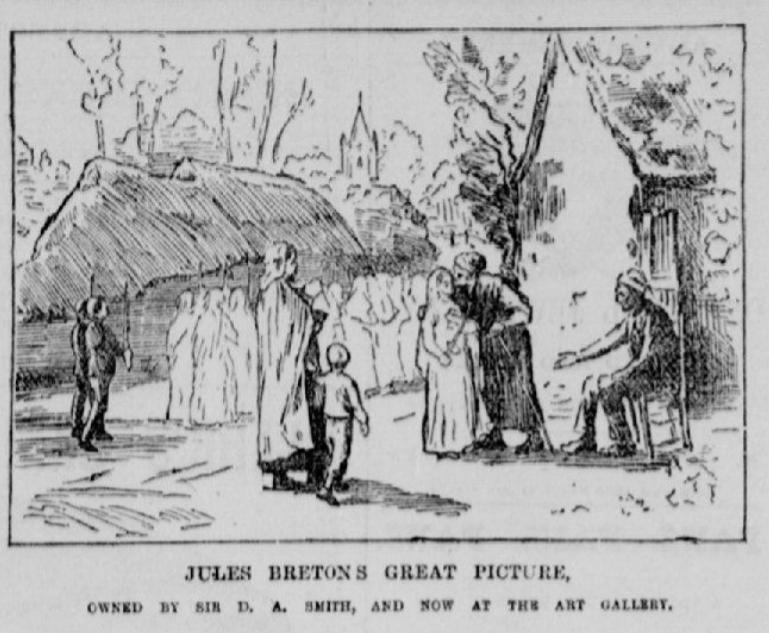
Les Journal des Arts, July 14, 1894, the Fouillon engraving illustrated
Pierre Gauthiez, "Un Peintre écrivaint: Jules Breton," Revue de l'art ancien et moderne, vol. 4, Paris, 1898, p. 210-3, illustrated
Doucet, La chanson des choses, Paris 1899, illustrated p. 211
Robert de la Sizeranne, 'Les paysans au Salon de 1899," Revue des Deux Mondes, vol. 153, May 1899, p. 421
Marius Vachon, Jules Breton, Paris, 1899, p. 101-2, 145, illustrated p. 69
Annales Politiques et Littéraires, May 24, 1903, no. 1039, p. 321, 328
Auguste Marguillier, "Review of 'Jules Breton' by Marius Vachon," Gazette des beaux-arts, 1899, no. 21, p. 86-8
Jules Breton, La Peinture, Paris, 1904, p. 38-41
"Breton," Masters in Art, Boston, 1907, pp. 39, 41, illustrated pl. 7
Aaron Schaffer, "Jules Breton, Parnassien," Modern Language Notes, Baltimore, vol. 47, December 1932, p. 512
Kenneth McConkey, Peasantries, exh. cat., Newcastle Upon Tyne, 1981, p. 23, illustrated fig. 13 and pl. 1
Hollister Sturges, Jules Breton and the French Rural Tradition, exh. cat., Joslyn Art Museum, Omaha, 1982, p. 99, no. 46, illustrated p. 101
Annette Bourrut Lacouture, "'Les Communiantes' (1884) de Jules Breton et le thème de la procession: genèse d'une oeuvre d'après des documents inédits," Bulletin de la Société de l'histoire de l'art Français, Paris, 1985, p. 175-200, illustrated p. 276
Annette Bourrut Lacouture, Jules Breton, Painter of Peasant Life, Museée des beaux-arts, Arras, Museée des beaux-arts, Quimper, National Gallery of Ireland, Dublin, exh. cat., Paris, 2002, p. 195-6, illustrated p. 194
- Catalogue Note:
At the beginning of the nineteenth century grand Salon submissions of religious subjects were encouraged, reinforced by the monarchy’s mutual support of church and state. Breton had tried his hand at large religious canvases while he was a student, including Saint Piat prêchent dans les Gaules (1846), an unfinished Chemin de Croix (1847) and Baptême de Christ (1851), all of which have since disappeared (Bourrut Lacouture, 1983, p. 176), but as the French political environment changed, so did the expectations of official artists. Large biblical narratives were abandoned by artists who instead sought to represent the Divine through humanity and the everyday (see lot 13). To this end, the representation of working people in rural France, and especially their religious rituals, pageants and processions, took on a special significance. If the abrupt and radical Realism of Gustave Courbet’s 1850 Salon submission, Burial at Ornans (Musée d’Orsay, Paris) did not ignite a broader movement in Realist art, it can be used, retrospectively, as a mid-century pivot point that happens to coincide with the initiation of Breton’s formidable career as an artist. Reexamination of Breton’s oeuvre, accolades and commercial success reveals that he was answering the call of the Realist and Naturalist movements while simultaneously participating in the Academic system, and Les communiantes gives clear evidence.
As the self-proclaimed "peasant who paints peasants," Jules Breton achieved recognition from his first Salon entry in 1849, and quickly earned recognition from his peers including Jean-Baptiste-Camille Corot, Gustave Courbet, Constant Troyon and Vincent Van Gogh, among others. Breton’s inspiration came from the real working people of rural France, and he achieved great commercial success by imbuing his subject with a certain amount of the ideal. Throughout his career, the theme of religious traditions allowed him to explore the spiritual heart of rural communities, notably in Brittany and Courrières, where he lived. One of the earliest paintings to explore the subject of communicants is Les Premières Communiantes à Courrières (circa 1860, Musée du Petit Palais, Paris, fig. 1), and foreshadows his inclination to the present subject which would be conceived more than twenty years later in response to a commission from the influential American agent, Samuel P. Avery.
Avery was critical in exposing American audiences to European Art in the second half of the nineteenth century, importing major works by Ernest Meissonier, Charles-François Daubigny and William Bouguereau, among others, and he provided Breton with many sales and commissions on behalf of collectors. Breton’s rural laborers appealed to American tastes and sensibilities for a number of reasons, chief among them was that they “appear to exist in a harmonious and classless society that was appealing in a country that prided itself on a democratic tradition” (Fiddell-Beaufort, Jules Breton and the French Rural Tradition, p. 51). Additionally, with many accolades and Salon medals to his name, the value and merit of his work was seen as indisputable. As a consequence, many of the artist’s most significant compositions were brought across the Atlantic, including Peasant Girl Knitting under a Tree (1870, The Metropolitan Museum of Art, New York), End of the Working Day (Fin du travail) (1886, Brooklyn Museum, see lot 2), Song of the Lark (1884, Art Institute of Chicago), The Weeders and The Vintage at Chateau Lagrange (1860 and 1864, Joslyn Art Museum, Omaha) among others.
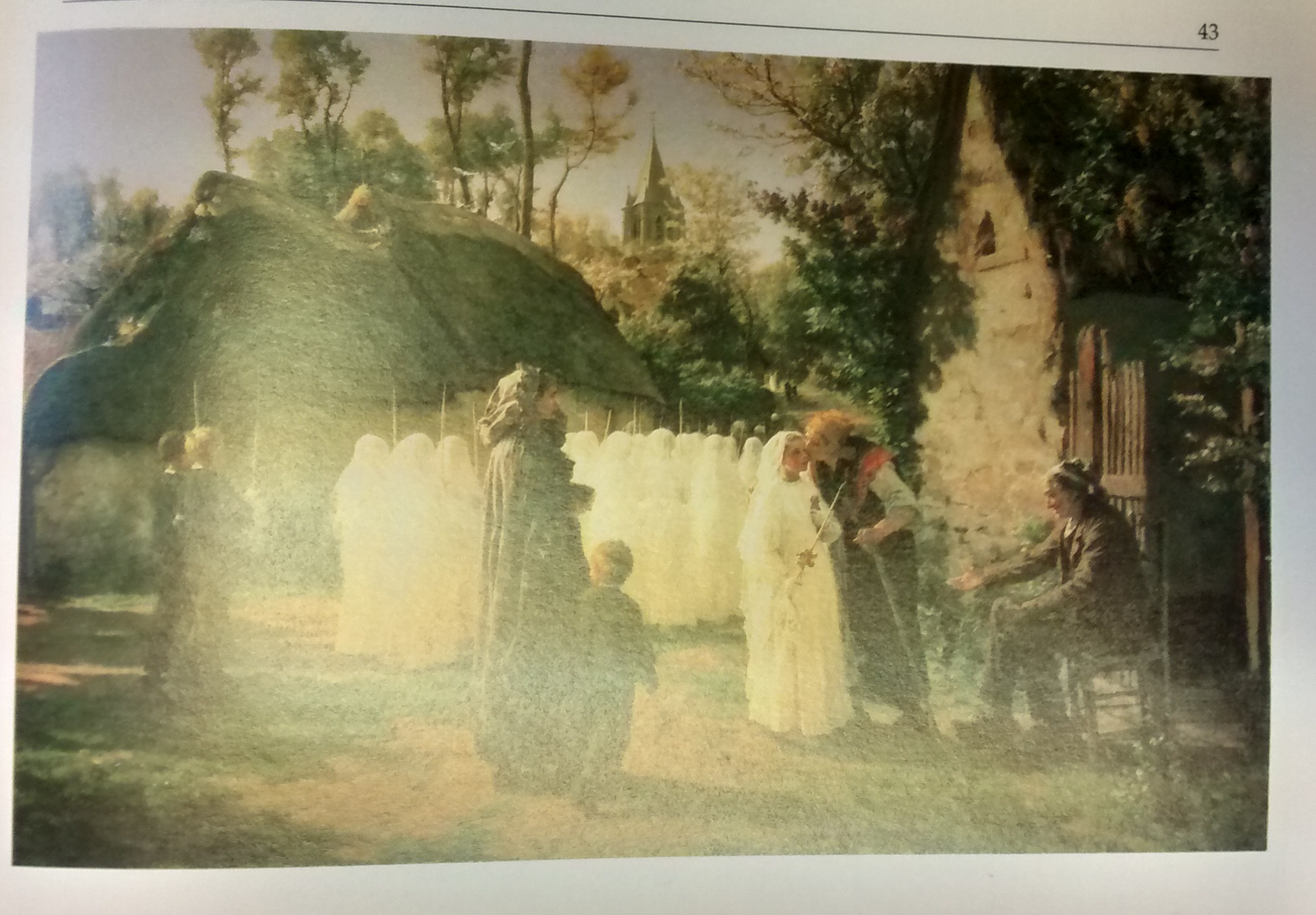
In a letter from May 4, 1882, in which he thanks Breton for Le Soir dans les Hameaux du Finistère (1882, The Paine Art Center, Oshkosh, Wisconsin), Avery commissioned a large composition with one, two or three figures, offering 50,000 francs. Once the artist accepted, he added on December 8: “I have so much confidence in your genius I am convinced that you will create a masterpiece, and want to leave you free to do what interests you most” (as quoted in Bourrut-Lacouture, p. 194). To show his enthusiasm for this creative freedom, and to quell Avery’s impatience, Breton sent him a letter on November 8, 1883, describing a summer spent sketching and preparing for the present work, which he expected to be among his most important paintings with “eight principal figures and fifteen in the background,” as well as his intention to include it in the Salon of 1884 (Bourrut-Lacouture, p. 194). The painting was carefully developed, as attested by the many known preparatory drawings and oil sketches that exist, as well as descriptions of his process in his wife Elodie’s diaries. While Breton would have been aware of the success of other Salon submissions on the theme of Communion, such as Bastien-Lepage’s La Communiante (1875, Musée des Beaux-Arts, Tournai, fig. 2) and Henri Gervex’s La première Communion à l’eglise de la Trinité (1877, Musée des Beaux-Arts, Dijon), he gives a broader view of the spiritual procession, affording full consideration to the atmosphere, the natural and built environment, as well as people engaged in various roles. It is a spring morning, with lilacs in bloom and birds fluttering above the village’s thatched roofs. The crisp sunlight casts shadows through the village, and illuminates the procession of children in white gossamer veils as they wind their way through the village towards the church. One critic, writing for the Art Journal on the subject of the 1884 Salon, hailed Les communiantes as “perhaps the finest work in the exhibition… In the detail, the characterization, the perfect technique, the harmonious and varied coloration, and above all in the feeling, this picture is especially fine” ("The Paris Salon," Art Journal, p. 223)
As promised, Avery purchased the painting for 50,000 francs, and then promptly sold it to Mary J. Morgan for $12,000. As one contemporary journalist put it: “What the most fabulous art dealer, what the most self-important artist asked, she paid without wincing” (Charles de Kay, “An American Gallery,” The Magazine of Art, 1886, p. 248). Two years later, at her auction on May 3 – 5, 1886, the work was purchased by Donald Smith, Lord Strathcona, president of the Bank of Montreal, for $45,000 — a sum representing the highest price ever paid for a work by a living artist at the time.
- Source:
http://www.sothebys.com/en/auctions/ecatalogue/2016/19th-century-european-art-n09499/lot.8.html
Page consultée le 31 mai 2016
* Brooke 1989 p.58 cat.5:
1884
Signé et daté en bas à gauche: Jules Breton 1884
Huile sur toile
124 x 191,5 cm
Toronto, Joey et Toby Tanenbaum
- Historique:
New York, Samuel P. Avery, commandé à l'artiste, 1882, 50,000F
New York, Mary J. Morgan, 1884-1886
New York, vente American Art Galleries, 3 mars 1886, no.235, 45,500$
Montréal, Sir Donald Alexander Smith, 1er baron Strathcona et Mount Royal, 1886-1914
Montréal, Charlotte Smith, baronne Strathcona et Mount Royal, en héritage, jusqu'en 1926
Glencoe House, l'hom. Mme Frances Margaret Kitson, en héritage, jusqu'en 1958
The Hon. Mrs. Kitson Foundation, jusqu'en 1988
Perth, prêté au Perth Museum and Art Gallery, 1948-1988
Londres, vente Christie's, 24 juin 1988, no.86
- Expositions:
Paris 1884, Salon, no.355
AAM 1887 no.91
AAM 1893 no.4
Londres, Guildhall, Corporation Art Gallery, Loan Collection of Pictures by Painters of the French School, 1898, no.20
Newcastle upon Tyne 1981
[...]
- Bibliographie [...]
- Archives [...]
* AAM1887:
Il est inscrit "Sir Donald" manuellement dans le catalogue.
Is on a stand in the large Gallery.
"Parmi les frais lilas, les renaissants feuillages,
Par ce printemps qui chante et rit dans les villages,
Par ce dimanche clair fillettes au front pur
Qui marchez vers la messe entre les jeunes branches,
Avez-vous pris au ciel communiantes blanches,
Vos robes de lumière ou frissonne l'azur!"
[Ce texte aurait été publié par Breton dans
Revue des Deux Mondes tome 75, 1886
Jules Breton
Les premières communiantes
http://fr.wikisource.org/wiki/Les_Premières_Communiantes_(Jules_Breton)
(page consultée le 26 octobre 2013):
Parmi les frais lilas, les renaissans feuillages,
Par ce printemps qui chante et rit dans les villages,
Par ce dimanche clair, fillettes au front pur
Qui marchez vers la messe entre les jeunes branches,
Avez-vous pris au ciel, communiantes blanches,
Vos robes de lumière où frissonne l’azur ?
Je le croirais à voir votre frêle cortège
S’épanouir au jour, dans sa candeur de neige,
Sous la brume du voile aux flots éblouissans ;
A la douce pudeur de vos bouches de vierges,
Au mignon bouquet d’or qui fleurit vos grands cierges,
Au paradis qui luit dans vos yeux innocens.
Comme tout alentour vous bénit et vous fête !
Les vieux chaumes moussus ont émaillé leur faîte
Et leur courbe arrondit de plus souples contours.
Tout brille. L’herbe tendre et d’aurore arrosée
D’où s’élève l’encens de la blanche rosée,
Déroule sous vos pas ses marges de velours.
Vos plis de tulle, au vent, vous font des ailes d’anges ;
Moins blancs sont les pigeons sur les hauts toits des granges ;
Moins blanche est l’aubépine aux rameaux embaumés !
Et vous allez ainsi vers l’antique chapelle
Où, ceint de verts tilleuls, le clocher vous appelle
Et dresse au blanc soleil ses angles allumés.
Et, blanches, vous allez. Voici l’église proche.
Votre cœur bat plus fort ; plus fort tinte la cloche ; Des vieillards attendris sont au pied de la tour. Le porche est grand ouvert : entrez, vierges mignonnes, Et puis faites, au bout de vos cierges de nonnes, Brûlantes, rayonner des étoiles d’amour.
Extase ! doux effroi de volupté mystique ! Sous vos doigts frémira la page du cantique Lorsque vous chanterez : « O doux Jésus, descends ! Ah ! viens, divin époux, le mêler à notre être ! » Puis vous verrez trembler l’hostie aux mains du prêtre Dans le vertigineux nuage de l’encens.
Recevoir dans son corps le Dieu qui fit la terre ! Filles, vous ignorez l’orgueil de ce mystère Et vous préférez même au grand Ressuscité Le beau Crucifié mourant sur la colline ; Vous l’aimez pour son front que couronne l’épine, Pour le grand trou qui saigne à son divin côté.
Et surtout vous aimez l’Enfant rose qu’inonde, Comme le tendre agneau, l’or de sa toison blonde, Qui s’en vint tant de fois sourire à vos berceaux, Avec ses yeux si clairs, quand vous étiez petites. N’est-ce pas pour cela que vous tressaillez, dites, Filles qui frissonnez sous les sacrés arceaux ?
Vainement la Raison succède à la Foi morte. A votre souvenir que nul souffle n’emporte, Qui n’a senti vibrer comme un rayon d’Éden ! Chantez, vierges ! Demain l’été fera sa gerbe ; A l’automne, les fruits mûrs tomberont dans l’herbe ; Chantez au blanc printemps votre premier hymen !
JULES BRETON.
* 1893 AAM:
Long texte.
Collectionneur(s) / propriétaire(s) recensés de l'œuvre
Smith (Lord Strathcona), Donald Alexander
(1886) Sotheby's 2016
http://www.sothebys.com/en/auctions/ecatalogue/2016/19th-century-european-art-n09499/lot.8.html
Page consultée le 31 mai 2016