Le travail présenté sur ce site est constitué par mes notes de recherche. Il a principalement été réalisé entre 2007 et 2019 alors que je poursuivais des études de baccalauréat, de maîtrise et de doctorat en histoire de l'art. Mes questions de recherche portaient sur les expositions organisées à Montréal entre 1860 et 1920, principalement les expositions d'œuvres prêtées à l'Art Association of Montreal devenue depuis le Musée des beaux-arts de Montréal. Le contenu est donc fortement orienté dans cette direction. Malgré tout, j'espère qu'il saura vous renseigner sur des aspects de cette période de notre passé artistique. Vous pouvez accéder à l'accueil des notes de recherche ou retourner sur l'accueil du site marcgauthier.com.
Autres titres
The Shepherdess (Twilight) (AAM1881)
Commentaires
****** Contrairement à Janet Brooke, je conserve séparément l'oeuvre In the Gloaming #3500 de l'oeuvre The Shepherdess #1248 dans la collection Frothingham. De plus, il ne faut pas oublier qu'une autre oeuvre intitulée The Shepherdess #4829 est dans la collection Drummond en 1918. Demeurer prudent dans ces associations.
** Janet M. Brooke associe les oeuvres suivantes de Millet exposées par Frothingham :
AAM 1878 no.49
AAM 1879 no.173
AAM 1880(1) no.121
AAM 1880(1) no.121
AAM 1881 no.124
AAM 1883 no.32
AAM 1885 no.164
AAM 1887 no.51
AAM 1888 no.65
AAM 1890 hors catalogue
AAM 1898 no.57
Je demeure plus prudent.
En particulier, l'oeuvre intitulée In the Gloaming est laissée sans lien formel avec celle-ci. Il en faut pas oublier qu'une autre oeuvre intitulée The Shepherdess est dans la collection Drummond en 1918.
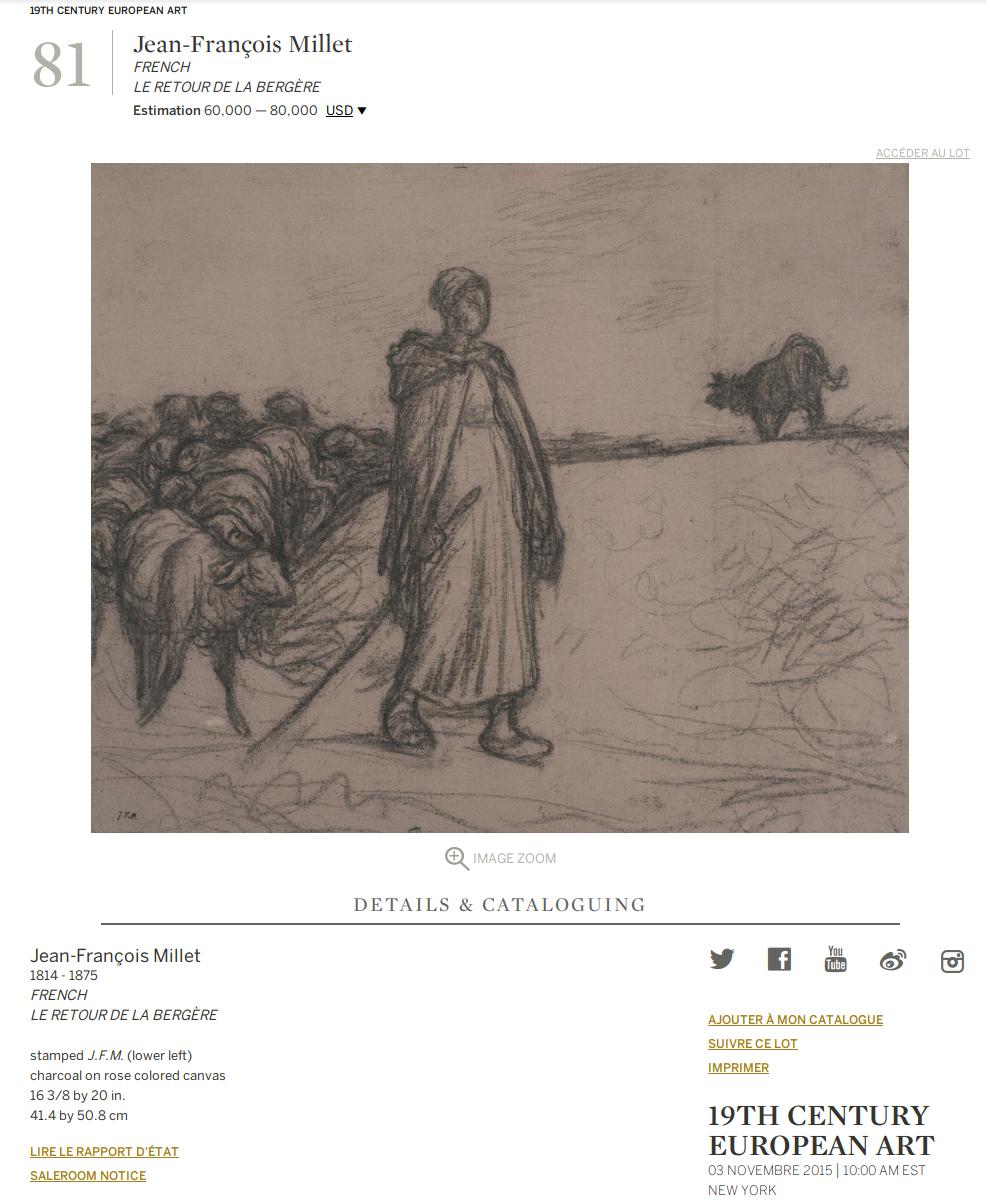
* 2015 Sotheby's:
Selon la fiche de la vente du fusain, une peinture similaire est présentement au Japon:
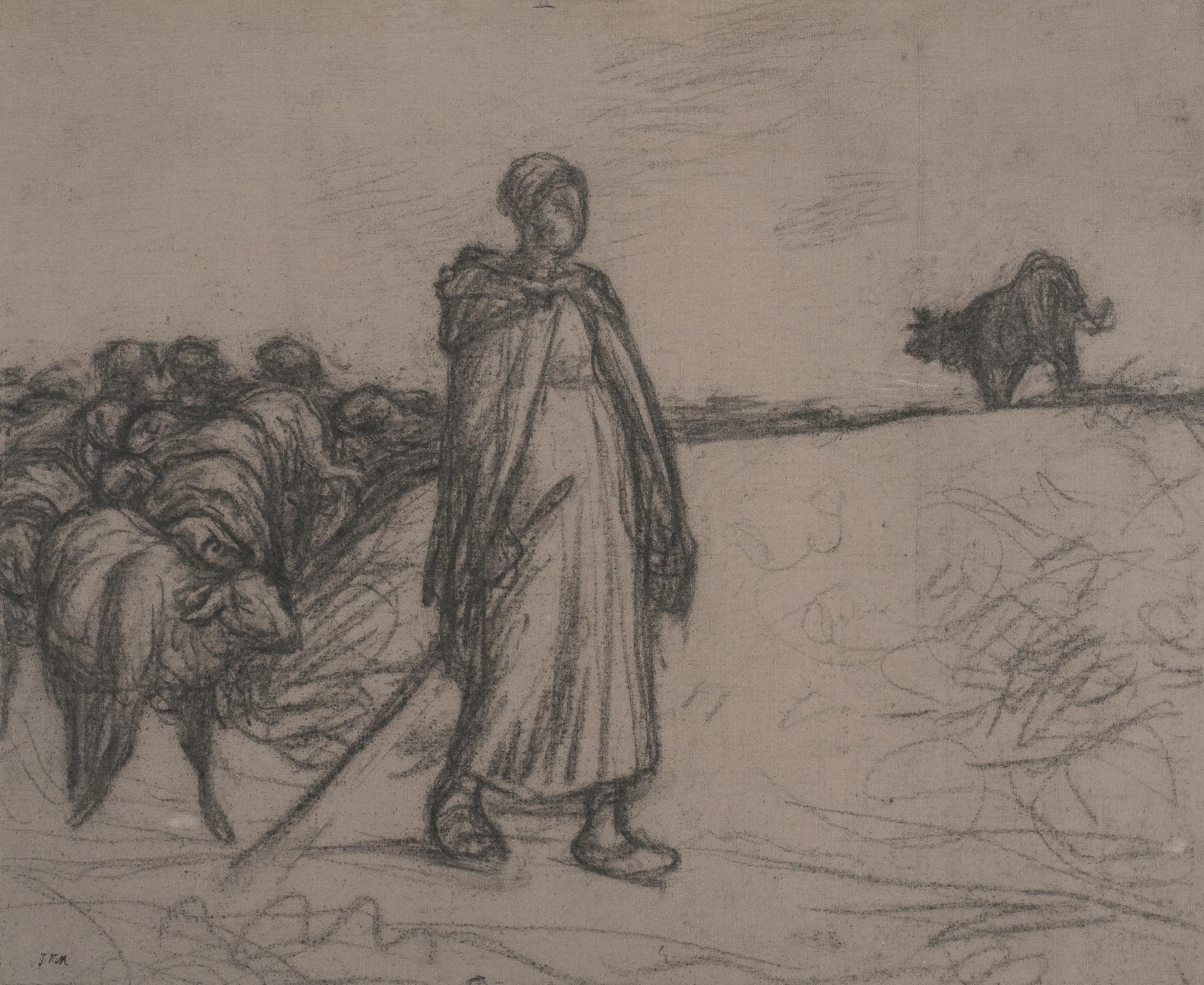
Where Laveuses à la fontaine and Le Jardinage are finished works, signed and destined for the market, Le Retour de la bergère and Les deux bêcheurs (lot 82) are working drawings, stages in the production of a further work and kept in the artist’s studio. (Both drawings are stamped with variations of Millet’s signature that were applied to works left after his death.) Large, as Millet’s working drawings go, and boldly drawn, both works have a compelling presence far beyond their original utilitarian purpose.
Le Retour de la bergère is mounted now as a traditional drawing, but the faintly rosy hue of the support is an important clue to the work’s origin as the original lay-in for a painting on canvas. (Millet was a generation ahead of most French painters in his preference for colored grounds for his paintings of the 1860s and 1870s.) Expanding a composition he had created in a watercolor drawing of the late 1850’s, Le Retour de la bergère presents a solitary shepherdess returning her flock to the village at twilight. Her watchful dog, surveying the troop from a low rise, is posed rump-up, in a motif that Millet must certainly have enjoyed, as he incorporated it into nearly a dozen works. Why Le Retour de la bergère was left unfinished is unclear (there is a just slightly larger painting of the same subject now in Japan) but Millet’s health was bad during the 1870s and he may simply have set it aside for a better day.
- Source: http://www.sothebys.com/fr/auctions/ecatalogue/lot.81.html/2015/19th-century-european-art-n09417
Page consultée le 19 août 2019
* 2008 Sotheby's:
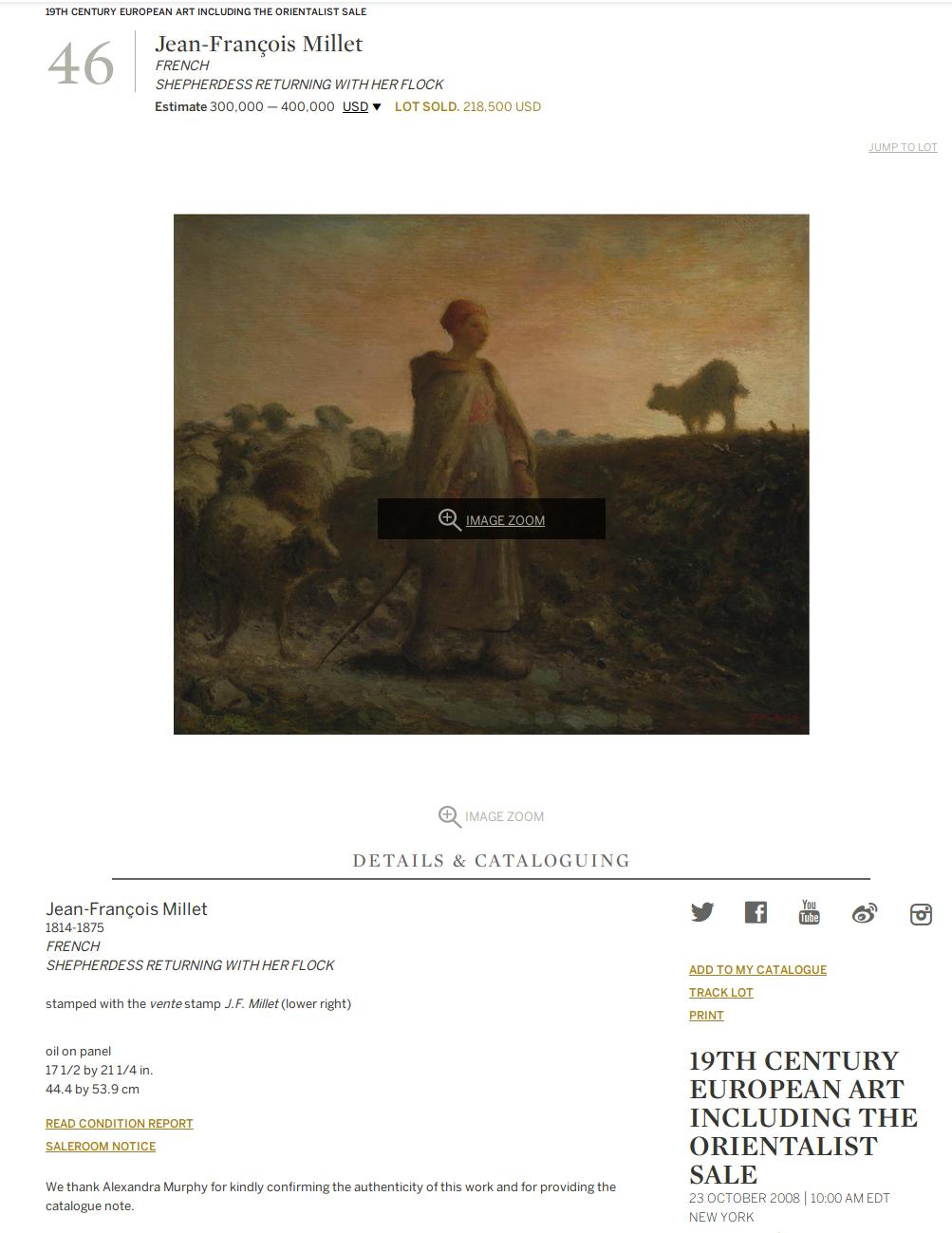
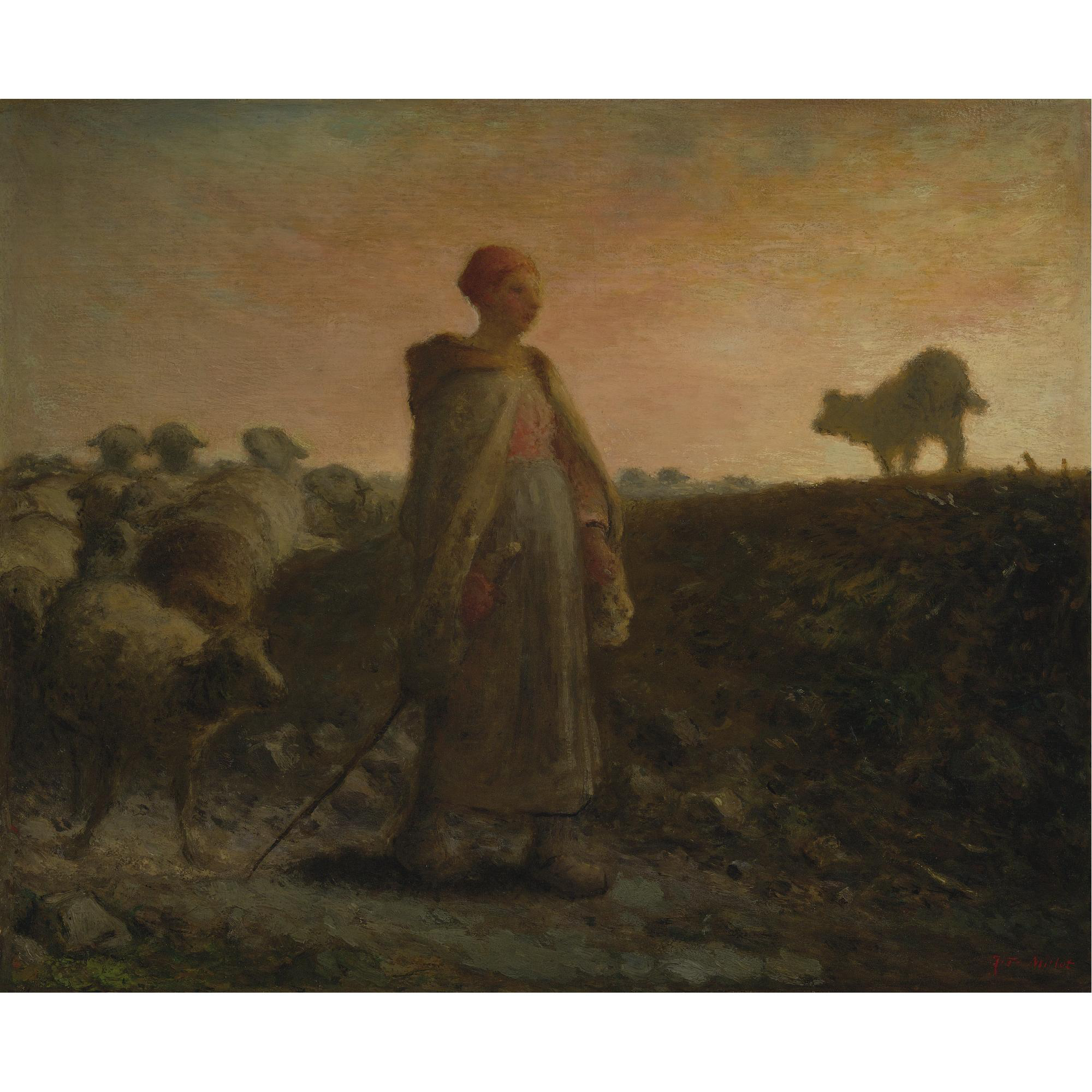
Il existe trois versions de ce thème.
Un tableau se trouve dans une collection privée au Japon.
Une autre version, réalisée sous la forme d'un dessin sur toile, est non localisé. [ce tableau-ci?]
Une troisième version est l'oeuvre vendue chez Sotheby's en 2008.
We thank Alexandra Murphy for kindly confirming the authenticity of this work and for providing the catalogue note.
--- Provenance
Millet's studio; sale: Hôtel Drouot, Paris, May 10-11, 1875, no. 54
Arthur Stevens, Paris and Brussels (acquired at the above sale)
Madame Briavoinne, Brussels (by 1887)
Boussod Valadon & Cie., Paris (circa 1900)
Harold I. Pratt, New York (by 1925)
Thence by descent
Sale: Doyle, New York, May 10, 1990, lot 28, illustrated
Acquired at the above sale by the present owner
--- Exhibited
Paris, École des Beaux-Arts, J.-F. Millet, 1887, no. 24, (as La Gardeuse de moutons)
Tokyo, Bunkamura Museum of Art; Kyoto, Municipal Museum of Art; and Kofu, Yamanashi Prefectural Museum of Art, Jean-François Millet, 1991, no. 85
Kofu, Yamanashi Prefectural Museum of Art, J.F. Millet, the Barbizon Artists and the Renewal of the Rural Tradition, 1998, no. VI-3
Nagoya, City Art Museum; Morioka, Iwate Museum of Art; Hiroshima, Museum of Art, Van Gogh, Millet and the Barbizon Artists, 2004, no. 54
--- Literature
Étienne Moreau-Nélaton, Millet raconté par lui-même, Paris, 1921, vol. III, p. 97, fig. 294
Paul Gsell, Millet, Paris, 1928, pl. 31.
--- Catalogue Note
Jean-François Millet painted Shepherdess Returning with her Flock during 1874, toward the end of his life, as he readdressed many of the favorite subjects that long defined his art. To a familiar theme, a solitary shepherdess leading a small troop of sheep to their evening's shelter, Millet brought a new emphasis on the monumentality of his figure and a complexity of color that edges beyond Barbizon realism toward a larger symbolism.
Since his arrival in Barbizon in 1849, Millet had been fascinated with the young women who tended small flocks of sheep as they grazed on wastelands along the margins of the immense wheat fields that defined their rural community. During his youth in northern Normandy, Millet had known sheep and cows to pasture unattended, safe in small fields enclosed by thick hedgerows. On the wide-open farmlands of Chailly, however, sheep and cows had to be watched constantly lest they wander into planted fields or strip young trees and shrubs beyond regrowth. Unlike the older men who commanded immense troops of sheep that traveled miles over the fields during the fallow season, the Barbizon shepherdesses were local teenagers who spent long hours, every day, close to their village homes but cut off from social contact, watching over placid flocks. In dozens of drawings and paintings, Millet presented these young shepherdesses, introducing his audience to the facts of such circumscribed lives: the hours of boredom and isolation, whiled away with knitting or daydreams; the occasional moments of pleasant distraction when a friend crossed the path; the bone-chilling winds, the stifling sun. Millet's sympathetic witness to the real truths of a village girl's life were part of his overall campaign to present the rural world honestly; but his particular interest in the local shepherdesses also reveals Millet's determined effort to retrieve the image of the shepherdess from the trivialization and sexual wantonness assigned her by so many eighteenth-century French artists and playwrights.
Where many of Millet's earlier shepherdess compositions seem to glory in the small details or particular moments of a sheep herder's life, Millet orchestrated the familiar components of Shepherdess Returning with her Flock with a deliberate simplicity that seems to reach beyond particular time or place. This shepherdess has the strict upright posture and unseeing forward gaze of a queen leading a procession, the dignity of a saint marching toward her fate. The austere generalization of the shepherdess's traditional costume, the pervasive golden tint of the fading sun, contribute to a mystical aura. Since the late 1860s, Millet had been moving toward a more monumental presence for his familiar field workers and village housewives; but with Shepherdess Returning with her Flock, he bestowed an especial grandeur upon a familiar village girl.
Shepherdess Returning with her Flock was certainly an important effort for Millet during 1874; he simultaneously developed a vertical variant of the composition (Private Collection, Japan) and left a second, squarer, version in the state of a free drawing on canvas (location unknown). Millet's absorption in the project probably reflects the extraordinary commission which he received during the spring of 1874, an invitation from the French state to paint scenes of the life of Saint Geneviève for the walls of the Panthéon. The patron saint of Paris, St. Geneviève was a fifth century heroine who calmed and rallied the citizens of Paris against the attacking Huns; and lacking other details of her life, traditional imagery often cast St. Geneviève as a shepherdess. For an artist who had been so consistently snubbed by the official art establishment, such a commission was an unexpected recognition. Millet began mulling his compositions almost immediately, and although he would die early in 1875 before he could undertake serious work on the Panthéon scenes, Shepherdess Returning with her Flock certainly can be seen as an indication of the designs he had in mind for that final suite of paintings.
--- Source: http://www.sothebys.com/en/auctions/ecatalogue/2008/19th-century-european-art-including-the-orientalist-sale-n08481/lot.46.html
Page consultée le 19 août 2019
* 1989 Brooke p.215 inv.873:
- Historique:
Montréal, héritiers Frothingham
Montréal, Mlles Frothingham, avant 1887
Montréal, George F. Benson
Montréal, Mme George F. Benson, en héritage, avant 1898
- Expositions:
AAM 1878 no.49
AAM 1879 no.173
AAM 1880(1) no.121, sous le titre In the Gloaming
AAM 1880(1) no.121, sous le titre In the Gloaming
AAM 1881 no.124
AAM 1883 no.32
AAM 1885 no.164
AAM 1887 no.51
AAM 1888 no.65
AAM 1890 hors catalogue
AAM 1898 no.57, prêté par Mme George F. Benson
- Bibliographie:
Canadian Spectator 7 juin 1879
Witness 4 juin 1890
- Fonds d'archives [...]
* 1883 AAM:
L'oeuvre est absente du registre.
* 1878 AAM:
L'artiste est identifié comme JEAN FRANCOIS MILLET, G. C. L. H.
* 1875 Drouot vente JF Millet:
Une oeuvre intitulée Le retour de la bergère est mentionnée aux pages X (pdf24), 15 (pdf41).
L'oeuvre mentionnée à la page 15 est celle vendue chez Sotheby's en 2008:
No. 54 Bergère rentrant avec son troupeau. (Soleil couchant.)
Le soleil est couché, l'étoile du soir s'incline déjà sur l'horizon. Une jeune fille rentre suivie de ses moutons, qui se pressent dans un chemin creux; le chien, sur un tertre, surveille le troupeau.
Hauteur 45c.; largent 51 c.
1874
Le chiffre 1000 est annoté dans la marge.
- Voir dans Documents 1875 Drouot Vente JF Millet
Collectionneur(s) / propriétaire(s) recensés de l'œuvre
Reproductions Les images sont fournies à titre indicatif seulement. Elles ne représentent pas nécessairement l'oeuvre en question.
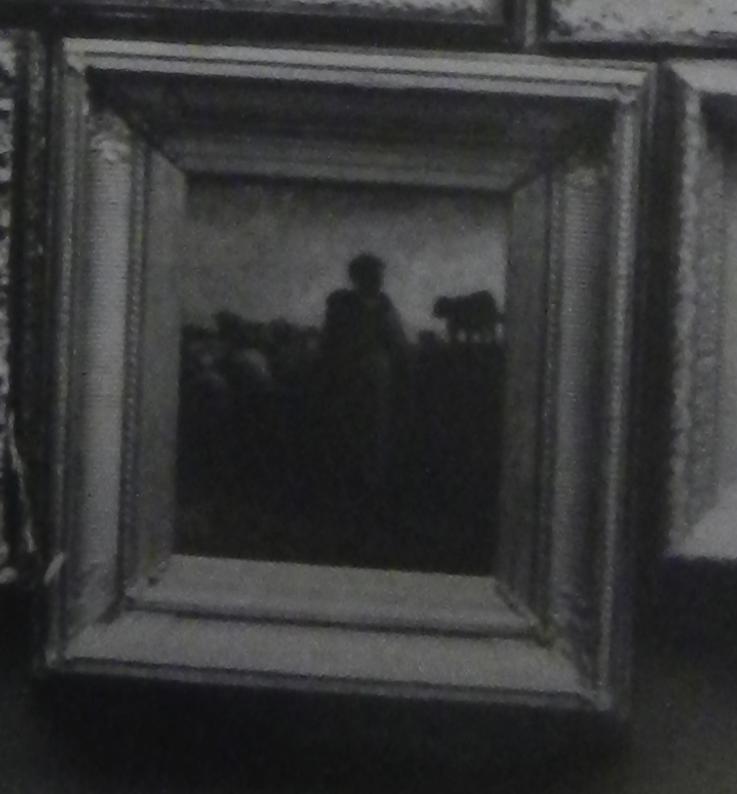
Album photo AAM
13R
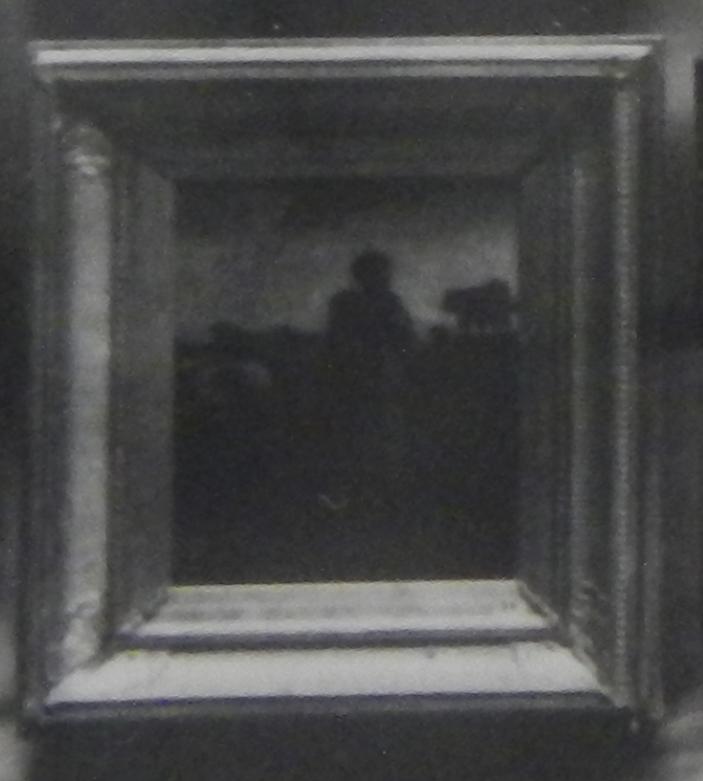
Album photo AAM
2R
Sotheby's 2015
http://www.sothebys.com/fr/auctions/ecatalogue/lot.81.html/2015/19th-century-european-art-n09417
Page consultée le 19 août 2019
Sotheby's 2015
http://www.sothebys.com/fr/auctions/ecatalogue/lot.81.html/2015/19th-century-european-art-n09417
Page consultée le 19 août 2019
Sotheby's 2008
http://www.sothebys.com/en/auctions/ecatalogue/2008/19th-century-european-art-including-the-orientalist-sale-n08481/lot.46.html
Page consultée le 19 août 2019
Sotheby's 2008
http://www.sothebys.com/en/auctions/ecatalogue/2008/19th-century-european-art-including-the-orientalist-sale-n08481/lot.46.html
Page consultée le 19 août 2019